Ennov eTMF Archive Secure Trial Master File Retention and Retrieval
Control your trial documentation. Stay inspection-ready.
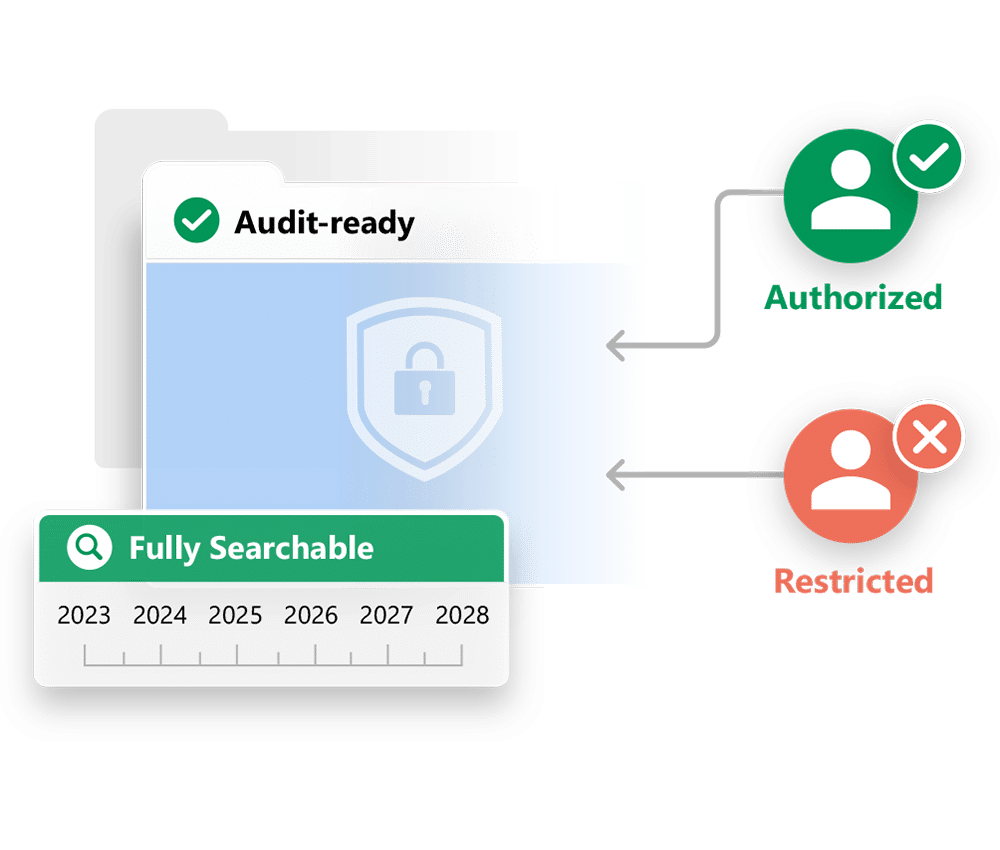
Preserve TMF content with structured metadata and controlled access
Support long-term retention and retrieval without relying on shared drives
Maintain audit-ready traceability for archived TMF documents
Reduce risk during closeout with consistent archiving workflows
Support secure TMF archiving for global teams and partners
The Trial Master File Archive Challenge
Sponsors do not always need an active eTMF for ongoing document filing and QC. In many outsourced models, the CRO manages the TMF during the trial, then delivers the TMF to the sponsor at closeout. From that point forward, the sponsor has a long-term obligation to retain the TMF securely and keep it accessible for audits, inspections, and internal reference, often for many years, and in some cases decades.
In this phase, the requirements are simple but critical. A TMF archive must preserve record integrity, limit access to authorized users, and support reliable retrieval when documentation is requested. For some organizations, a full-featured eTMF may be more functionality than they need for long-term retention, which is why TMF archiving and secure TMF archiving become a distinct use case with its own priorities.
A Simple, Inspectable TMF Archive
Ennov’s TMF archive is designed to make archived Trial Master File content easy to search, review, and retrieve during audits and inspections. Inspectors and study teams can navigate an archive structure aligned to the TMF Reference Model, filter document lists by key metadata, and use search to find the right record quickly. Features like favorites and recently viewed lists help reviewers move efficiently through high-volume TMF content.
Access can be controlled based on the scope of an inspection, so reviewers see only what they are authorized to view. You can also maintain visibility into which documents were accessed and in what order, supporting traceability during inspection activity.
Documents can be migrated into the TMF archive using common TMF metadata, such as study, country, site, and artifact type, to populate the archive structure. The archive can also retain additional attributes, such as document date, expiration date, topic or subject, and other configurable metadata fields, helping improve retrieval over long retention periods.
Because the solution is purpose-built for TMF archiving, validation can be completed efficiently. Ennov provides a validation and user acceptance package to reduce burden on your teams while supporting long-term use and inspection readiness.
Core Capabilities
Secure repository
Flexible rights management – limit inspectors and other users based on need to know
Folder and Filter View navigation
Advanced Search
Favorite and recent document lists
Key Features
Intuitive user interface
Easy management of users (internal and inspector)
Streamlined migration of documents into archive
100% web-based
21 CFR Part 11 compliant
How to Build a Strong Foundation for Commercial Growth
Learn how unifying Quality, Regulatory, and TMF archive management into one system eliminated ongoing CRO fees and helped teams move faster without adding headcount.
How an academic research group replaced fragmented, outdated tools with a self-configured, unified platform covering study management, quality, eTMF, and analytics.
Efficiently & Securely Capture & Manage Clinical Trial Information
The Ennov Clinical suite consists of Clinical Data Management applications as well as Clinical Trial Management applications that are available for deployment in the cloud or on premises.
Over 25 years of experience providing software solutions for Life Sciences and 650+ Life Science customers, with many more in other industries.
Modern architecture and interface
100% web-based. Highly scalable. User-centric design.
Our commitment to your success
Very high customer satisfaction, 98.5% of projects delivered on time and within budget.
Providing you freedom of choice
Available as cloud-based or on-premises deployment, you can switch between deployment options at any time.
System configuration and management require no IT skills, making you fully autonomous
Improved security and optimized performance. Data can be hosted locally for total flexibility. Single-tenancy minimizes business interruptions.
Cloud-based or On Premises
Multi-Platform
ISO 9001 & 27001 Certified
eTMF Archive FAQs
What is a TMF archive?
eTMF software (electronic Trial Master File software) helps clinical teams manage essential TMF documents in a structured, inspection-ready way throughout a trial. It centralizes filing, QC, completeness oversight, and role-based access so sponsors, CROs, and sites can maintain control and visibility across TMF health.
What is TMF archiving used for?
A TMF archive is a system designed for long-term retention and retrieval of Trial Master File content after study closeout. It helps sponsors preserve records securely, control access over time, and retrieve the right documents quickly for audits, inspections, and internal reference.
What is the difference between an eTMF and a TMF archive?
TMF archiving is used to store closed or inactive TMF content for years, sometimes decades, while maintaining record integrity and access control. It reduces reliance on shared drives, exported folders, or legacy storage, and makes it easier to respond when documentation is requested during an inspection.
What does “secure TMF archiving” mean in practice?
Secure TMF archiving means keeping archived TMF records protected with controlled access, traceable history, and governance over who can view or retrieve content. It should help preserve record integrity and support inspection readiness years after a trial ends.
How does a TMF archive support inspector access scope?
A TMF archive should let you control what an inspector can access based on the scope of an inspection. That includes limiting access to specific studies, countries, sites, or document types, while maintaining traceability of what was viewed and when.
What should I look for in TMF archive software?
Look for structured metadata, strong search and filtering, controlled access, and audit-ready traceability. You should also evaluate how the archive supports long retention periods, how easily it can ingest TMF transfers from CROs or other systems, and how consistently it preserves context for retrieval.
How does TMF archiving work when a CRO delivers the TMF at closeout?
In many outsourced models, the CRO manages the TMF during the trial and transfers it to the sponsor at closeout. A TMF archive helps the sponsor retain that delivered TMF securely and keep it accessible over time, without needing the same operational setup required for active TMF management.
Can a TMF archive support TMF transfers and migrations from other platforms?
Yes. A TMF archive is commonly used when sponsors need to retain TMF content from multiple sources, including CRO deliveries and legacy platforms. In the broader eTMF market, long-term archival and TMF transfer capability is considered an important requirement.
How does a TMF archive help with audits and inspections?
A TMF archive helps audits and inspections by making it easier to retrieve the correct document version with context and traceability. It supports inspection readiness after closeout by preserving structured access control and an audit-ready record of archived content.
Does a TMF archive need to support any standards for transfer?
Some organizations evaluate archives in the context of transfer standards used for regulated TMF record exchange. For example, the market increasingly references EMS (Exchange Mechanism Standard) in relation to compliant TMF transfers.