

Clinical trials are becoming increasingly complex in 2026, requiring sponsors, CROs, and clinical operations teams to manage large volumes of operational data, investigator sites, patient enrollment activities, and regulatory requirements.
If you are asking what is CTMS or what is a CTMS, the answer is simple:
A clinical trial management system helps sponsors, CROs, and clinical operations teams manage the growing complexity of modern studies. If you are asking what is CTMS, it is software used to plan, track, and manage clinical trial operations from study start-up through close-out.
A modern clinical trial management system helps organizations improve visibility, reduce operational risk, maintain compliance, and streamline clinical trial execution.
What Is a CTMS and Why Is It Important?
A Clinical Trial Management System (CTMS) centralizes operational activities across clinical trials, helping teams manage timelines, investigator sites, recruitment, monitoring activities, and study performance.
For organizations asking what is CTMS in clinical research, its primary role is to provide a central environment for managing the operational side of clinical studies.
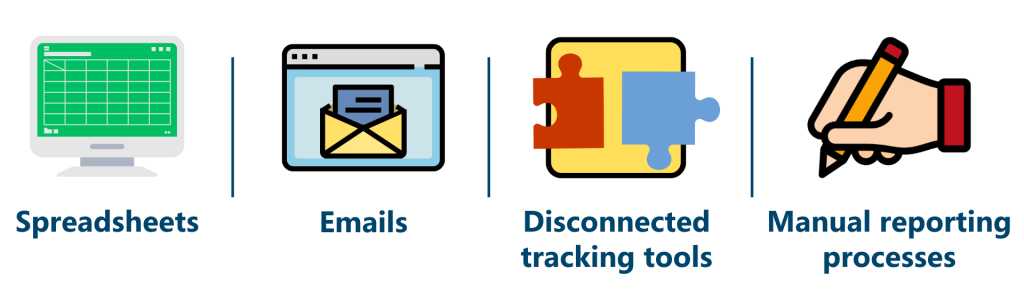
Without a centralized CTMS platform, many clinical operations teams rely on:
This often leads to operational inefficiencies, poor visibility, and increased compliance risk.
A modern clinical trial management system provides a centralized environment where sponsors and CROs can monitor study progress, manage workflows, and improve decision-making across the trial lifecycle.
Key Challenges a CTMS Helps Solve
Clinical trials involve multiple stakeholders, global sites, strict timelines, and evolving regulatory expectations. A CTMS in clinical research helps organizations address these operational challenges efficiently.
Limited Operational Visibility
Clinical trials may involve dozens or hundreds of investigator sites across multiple regions.
Without centralized oversight, teams may struggle to:
- Track study milestones
- Monitor site performance
- Identify operational risks
- Maintain enrollment timelines
A CTMS platform provides real-time visibility into study operations and performance metrics.
Investigator Site Management
Each investigator site has different staff, recruitment performance, and operational capabilities.
CTMS software helps sponsors and CROs manage:
- Site activation
- Monitoring visits
- Enrollment rates
- Protocol deviations
- Site performance metrics
This helps teams quickly identify underperforming sites and take corrective action.
Patient Recruitment and Enrollment Tracking
Patient recruitment remains one of the biggest challenges in clinical research.
A CTMS helps organizations:
- Monitor enrollment metrics in real time
- Compare site recruitment performance
- Forecast recruitment timelines
- Adjust recruitment strategies proactively
This improves enrollment efficiency and helps keep studies on schedule.
Clinical Trial Coordination and Administrative Workload
Clinical trials generate significant operational coordination requirements.
CTMS software helps streamline activities such as:
- Scheduling monitoring visits
- Tracking study milestones
- Managing investigator payments
- Preparing operational reports
- Coordinating cross-functional teams
Automation reduces manual tracking and improves operational efficiency.
Regulatory Compliance and Documentation Readiness
Clinical trials must maintain detailed operational records to support regulatory compliance and inspection readiness.
When integrated with systems such as an electronic Trial Master File (eTMF), CTMS platforms help organizations:
- Maintain inspection-ready documentation
- Track operational activities
- Improve traceability
- Support audit readiness
This reduces compliance risk across clinical operations.
Core Features of CTMS Software
Modern clinical trial management system software includes several core capabilities designed to support clinical trial management.
Study Planning and Tracking
- Study milestone management
- Trial timelines
- Resource planning
- Operational forecasting
Site Management
- Site activation tracking
- Site performance monitoring
- Monitoring visit scheduling
- Investigator management
Patient Enrollment Tracking
- Enrollment forecasting
- Recruitment analytics
- Site enrollment comparisons
- Retention monitoring
Financial Management
- Investigator payment tracking
- Budget oversight
- Contract management
Reporting and Dashboards
- Operational KPIs
- Study performance dashboards
- Real-time analytics
- Executive reporting
These capabilities help organizations centralize trial management activities within a single platform.
Benefits of a Clinical Trial Management System
Implementing a clinical trial management system provides several operational and strategic benefits.
Improved Operational Visibility
Centralized dashboards provide real-time insight into study performance and timelines.

Better Site Performance Management
Organizations can identify risks and optimize site operations faster.

Faster Decision-Making
Real-time data allows teams to respond quickly to operational issues.

Reduced Administrative Burden
Automation reduces manual coordination and reporting tasks.

Improved Compliance Readiness
Integrated workflows and centralized documentation support inspection preparedness.
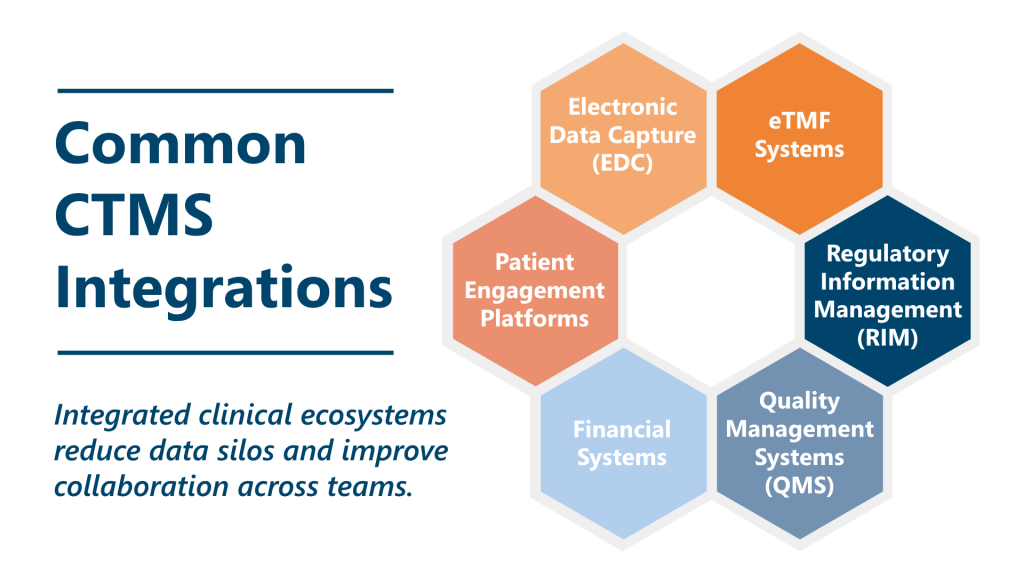
CTMS Integration with Other Clinical Systems
Modern clinical trial management systems are most effective when integrated with other clinical and regulatory systems.
Clinical Trial Management System Examples
Common clinical trial management system examples include standalone CTMS platforms as well as integrated clinical platforms that connect CTMS capabilities with systems such as EDC, eTMF, quality management, and regulatory applications.
How Ennov Supports Clinical Trial Management
Ennov provides an integrated clinical platform that connects:
- CTMS
- EDC/CDMS
- eTMF
- Quality Management
- Regulatory processes
This unified approach improves operational visibility, reduces fragmentation, and helps organizations maintain compliance across clinical operations.
Benefits of the Ennov CTMS Platform
- Centralized operational oversight
- Configurable workflows
- Real-time dashboards and analytics
- Integrated compliance management
- Scalability for global clinical programs
Ennov helps sponsors, CROs, and life sciences organizations streamline trial execution while reducing operational complexity.
The Future of CTMS Software in 2026
Clinical trial management systems continue evolving to support more complex and decentralized trials.
Key Trends Shaping CTMS Platforms
- AI-driven operational insights
- Decentralized clinical trial support
- Real-time analytics and forecasting
- Increased automation
- Unified clinical ecosystems
Modern CTMS software is becoming a strategic platform for improving trial efficiency, compliance, and scalability.
FAQs About Clinical Trial Management Systems
What is a CTMS?
A CTMS, or Clinical Trial Management System, is software used to manage clinical trial operations, including study planning, site management, enrollment tracking, monitoring activities, and operational reporting.
What Is CTMS in Clinical Research?
CTMS in clinical research refers to the software used by sponsors, CROs, and clinical operations teams to plan, track, and manage the operational activities involved in running clinical trials.
What does CTMS software do?
CTMS software helps sponsors and CROs centralize clinical trial operations, automate workflows, track performance, and improve operational visibility.
Why is a CTMS important?
A clinical trial management system improves efficiency, supports compliance, reduces operational risk, and helps organizations keep clinical trials on schedule.
What are some clinical trial management system examples?
Clinical trial management system examples include standalone CTMS solutions and integrated clinical platforms that combine trial management with capabilities such as EDC, eTMF, quality management, analytics, and regulatory processes.
What is the difference between CTMS and EDC?
CTMS focuses on operational trial management, while EDC systems focus on collecting and managing clinical trial data.
Who uses CTMS software?
CTMS platforms are commonly used by pharmaceutical companies, biotechnology organizations, CROs, and clinical operations teams.
Conclusion
So, what is a CTMS?
A Clinical Trial Management System is a centralized platform that helps organizations manage the operational complexity of modern clinical trials.
From investigator site management and patient enrollment tracking to compliance oversight and operational reporting, a clinical trial management system plays a critical role in improving clinical trial efficiency and reducing operational risk.
As clinical trials become increasingly data-driven and decentralized, integrated CTMS platforms like Ennov help organizations maintain visibility, improve collaboration, and streamline clinical operations at scale.