


Packaging Artwork Rarely Gets Attention Until Something Goes Wrong
Packaging artwork rarely makes headlines. Nobody writes case studies about labels. Yet in regulated life sciences organizations, a single error on a label, carton, leaflet, or packaging component can delay a product launch, trigger a regulatory inspection, or, in the most serious cases, place incorrect information in front of patients.
That is why packaging artwork management has become a critical business process rather than simply a design activity. Every packaging component must be reviewed, approved, controlled, and aligned with regulatory requirements before it reaches the market.
The teams responsible for this work already understand the stakes. What they often lack is a process that can manage the complexity of modern pharmaceutical operations while maintaining compliance, traceability, and efficiency.
Packaging Artwork Management Is More Than a Design Process
Many organizations still view packaging artwork management as a downstream operational task. Design creates a file, stakeholders review it, approvals are collected, and the artwork moves to production.
In reality, artwork sits at the intersection of Regulatory Affairs, Quality, labeling, manufacturing, supply chain, and commercial operations. A packaging update may be triggered by a change to approved product data managed within a regulatory information management software solution, a quality event managed through qms software, or a submission update that ultimately becomes part of a regulatory publishing software workflow.
Each change introduces multiple reviewers, approval requirements, and compliance obligations. Stakeholders are often distributed across regions, functions, and time zones. When global product portfolios and market-specific requirements are added to the mix, what appears to be a design task quickly becomes one of the most operationally complex processes within the organization.
The 5 Most Common Packaging Artwork Management Challenges
When life sciences professionals discuss where packaging artwork management most frequently breaks down, the same challenges consistently emerge.
1. Version Control
When teams work across shared drives, local folders, cloud storage platforms, and email threads, it becomes increasingly difficult to determine which version of an artwork file is current.
Without proper version control, teams may review outdated files, approve incorrect content, or send the wrong version to production. These mistakes create unnecessary rework, delays, and compliance risks.
Modern artwork management software should provide centralized version control, ensuring every stakeholder works from a single source of truth throughout the artwork lifecycle.
2. Stakeholder Collaboration
Artwork review often requires input from Regulatory Affairs, Quality, Legal, Manufacturing, Marketing, Safety, and local labeling experts.
Without a structured artwork approval workflow, organizations spend significant time chasing approvals, consolidating feedback, and reconciling conflicting comments from multiple channels.
The challenge is not simply collecting feedback. It is ensuring that feedback is reviewed, addressed, documented, and traceable throughout the review cycle.
3. Unclear Ownership and Approval Processes
Who owns the artwork review process? Who provides final approval? Which stakeholders are required for each market?
In organizations that rely on manual processes, these questions are often answered inconsistently. As a result, projects become delayed, responsibilities become unclear, and compliance gaps emerge.
A controlled packaging artwork management process establishes clear ownership, automated routing, and defined approval paths for every artwork project.
4. Audit Trail and Compliance Requirements
In regulated industries, organizations must demonstrate exactly who reviewed artwork, when they reviewed it, what comments were made, and what changes were implemented before approval.
This level of traceability is essential during inspections and audits.
Unfortunately, spreadsheets, email chains, and shared folders do not provide the audit trail required by regulators. Reconstructing approval histories manually is time-consuming and often incomplete.
Purpose-built pharmaceutical artwork management solutions maintain complete records of reviews, approvals, annotations, and electronic signatures, making inspection readiness significantly easier.
5. Lack of Visibility Into Project Status
Many project leaders have limited visibility into where artwork projects stand at any given moment.
Questions such as:
- Which projects are awaiting approval?
- Which reviews are overdue?
- Which products are at risk of missing launch deadlines?
are often difficult to answer without manually gathering updates from multiple teams.
This lack of visibility prevents proactive management and creates unnecessary delays. Centralized dashboards and reporting capabilities help teams identify bottlenecks before they impact timelines.
The tools most commonly used to manage artwork, shared network drives, email, spreadsheets, and generic project management software, were never designed for regulated pharmaceutical environments.
They cannot reliably enforce version control. They do not provide complete audit trails. They lack the structured workflows needed to support compliant artwork approval processes.
Most importantly, they do not connect artwork files to the regulatory, quality, and document data that gives those files their context.
When an inspector asks for the complete history of a packaging component, including every version, every reviewer, every comment, and every approval, a shared drive cannot answer that question. Someone must manually reconstruct the history, introducing delays and increasing the risk of missing information.
The operational cost is equally significant. Reviewers may unknowingly comment on outdated files. Feedback becomes fragmented across multiple systems. Project teams spend valuable time reconciling comments instead of moving projects forward.
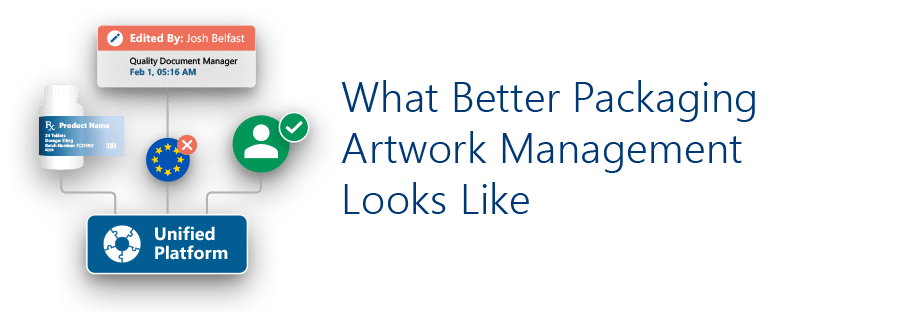
Improving packaging artwork management does not require organizations to redesign their entire operating model. It requires replacing disconnected tools with systems specifically designed for regulated workflows.
A modern artwork management software platform centralizes artwork files, versions, comments, annotations, approvals, and decisions in a single environment.
Every version is preserved with a complete audit history. Reviewers can verify whether requested changes have been implemented before approving subsequent versions. Electronic signatures replace paper approvals and provide the compliance documentation required during inspections.
Workflows automate the routing of tasks, approvals, and notifications. Instead of relying on project managers to manually follow up with reviewers, the system automatically directs work to the appropriate stakeholders and records every action.
This not only improves efficiency but also strengthens compliance and accountability throughout the artwork lifecycle.
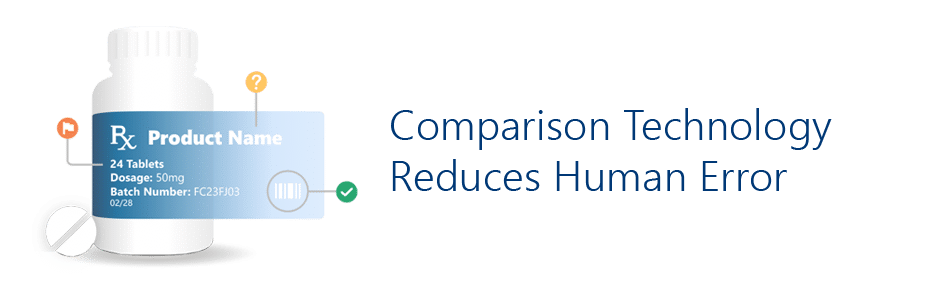
One of the most powerful capabilities within modern pharmaceutical artwork management solutions is automated comparison technology.
Artwork reviews often involve identifying small but critical changes between versions. These changes may include:
- Text updates
- Font modifications
- Color changes
- Layout adjustments
- Regulatory statement revisions
- Barcode updates
Purpose-built comparison tools can detect differences down to the pixel level, helping reviewers identify issues that may otherwise be missed during manual reviews.
This additional layer of validation significantly reduces risk before artwork reaches production.

One of the biggest challenges in packaging artwork management is that the information required to create compliant artwork rarely exists in a single location.
Approved product data often resides within a regulatory information management software platform. Change controls, deviations, and CAPAs may be managed through qms software. Controlled content frequently lives within a regulatory document management system. Final approved labels and inserts may eventually become part of a regulatory publishing software workflow for global health authority submissions.
When artwork processes operate independently from these systems, teams are forced to manually transfer information between applications, increasing the risk of inconsistencies, delays, and compliance issues.
A unified compliance platform connects these processes together. Changes to regulatory data, quality events, or controlled documents can automatically trigger artwork workflows, helping organizations maintain consistency across the entire product lifecycle.
The artwork team creates the project. Quality updates controlled documents. Regulatory prepares submission activities. Each process remains connected to the same underlying data while providing visibility across departments.
This level of integration reduces duplication, improves data integrity, and supports faster decision-making.
Final Takeaway
Better packaging artwork management is not simply about moving projects faster, although efficiency gains are often substantial.
It is about eliminating the fragmentation that turns a routine packaging update into a complex process filled with version confusion, missed feedback, approval delays, and compliance risks.
When artwork workflows are controlled, versions are traceable, reviews are automated, and data is connected across Regulatory, Quality, and document management processes, organizations can reduce risk while improving operational performance.
The result is a more reliable artwork process, stronger compliance, and greater confidence that packaging materials reaching the market are accurate, approved, and inspection-ready.
Request a demo to see how Ennov Artwork and the Unified Compliance Platform help Regulatory, Quality, and labeling teams manage packaging artwork from a single source of truth, streamline approvals, and reduce compliance risk throughout the artwork lifecycle.